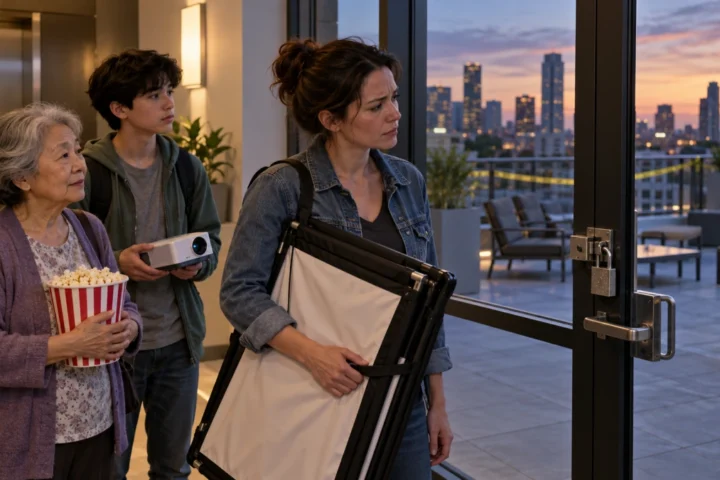
Original fiction The Locked Rooftop The folded movie screen was still under my arm when the elevator opened on the rooftop floor. Someone had put a new padlock on the glass door. A notice taped to it read, “AREA CLOSED DUE TO RESIDENT RULE VIOLATIONS.” Kai held the projector; Mrs. Sato carried popcorn; two children…
At 6:30 every morning, three knocks sounded through my bedroom ceiling. I had usually been asleep for four hours after my late shift. My daughter, Molly, would burrow deeper under her blanket while I stared at the plaster and counted. Ever since we had moved into apartment 2B, the knocks had come at exactly the same time. Sometimes two softer knocks answered them, and then the building went quiet.
I emailed the property manager three times. Dale said the sound came from 3B, where Harold Whitaker, a retired man who lived alone, had an apartment. Dale promised to remind him that quiet hours lasted until seven. When nothing changed, I filed a formal noise complaint. I did not want Harold fined. I wanted forty-five more minutes of sleep before I got Molly to school and returned to work.
Yesterday afternoon, I saw a warning notice beneath Harold's door. I was on the third floor returning a scarf Molly had dropped. Harold stood beside the notice, reading it twice. I walked past without admitting I was the person who had complained.
This morning, 6:30 came without the three knocks. I lay still, waiting to feel relieved. Instead, two sharp taps traveled along the heating pipe. They came again, faster. Footsteps shuffled in the hall, followed by pounding on my door.
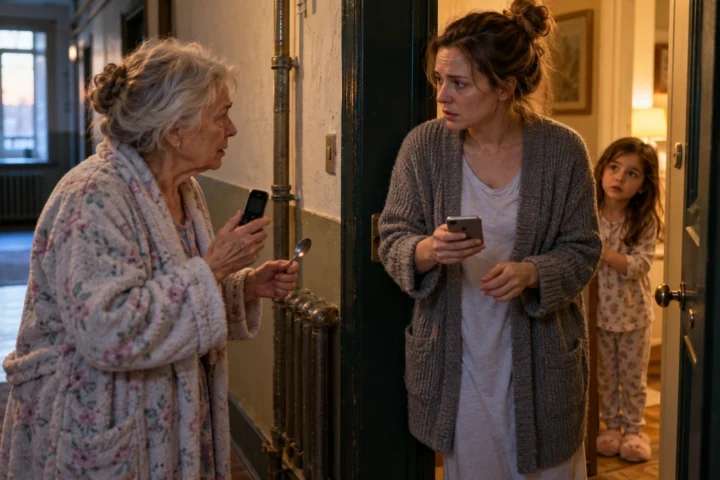
Beatrice Bell from 3C stood outside in her robe, clutching an old phone. “Harold isn't answering,” she said. “I sent my signal twice. He has never missed a morning without telling me.”
My clock read 6:34. Beatrice pointed toward the spot on my ceiling where I had wanted the noise to disappear. “Do you have Dale's number? I can't get into Harold's place. The lobby intercom is still broken.”
Molly appeared behind me, barefoot on the cold floor. For the first time, I understood that the three knocks were meant for someone other than the woman trying to sleep below. Now they had stopped, and the three of us had to decide what to do before waiting became its own decision.
The woman holding the real estate sign asked Nathan Vale to move his tomatoes before she photographed the yard.
He had just lowered a seedling into the bed beside Ruth Bell's kitchen window. Dirt darkened the knees of his only decent jeans. Behind him, the garden gate stood open, exactly as Ruth had always left it.
“These aren't mine to move,” he said.
Claire Bell looked at the flat of plants by his feet. “But you're planting them.”
Ruth had been dead for nineteen days. Her daughter had driven down from Toledo with a borrowed trailer, three empty coffee cups, and the belief that clearing a house meant dealing with things inside it.
Nathan had moved into the upstairs apartment next door after his divorce. For most of last summer, Ruth's garden had been the only place where he could spend an evening without hearing his refrigerator switch on.
“She told me to keep it going,” he said.
Claire set the sign against the fence. “She told me she wanted less work.”
Before either could answer, Alma Ruiz appeared at the alley entrance carrying a blue bucket. She stopped when she saw the new tomato plants.
“That's where the marigolds go,” Alma said. “We put them there for Luis every June.”
Across the fence, a boy's voice called, “Did you move my beans?”
Nathan looked down. A row of little sticks lay beside his trowel. He had mistaken them for winter debris.
Claire shut her eyes for a moment. Then she opened the gate wider, not as an invitation but to make room for everyone who seemed to have a claim on her mother's backyard.
“Nobody plants anything else,” she said. “Not until somebody tells me what my mother promised.”
My grandson turned his phone toward me before taking off his coat.
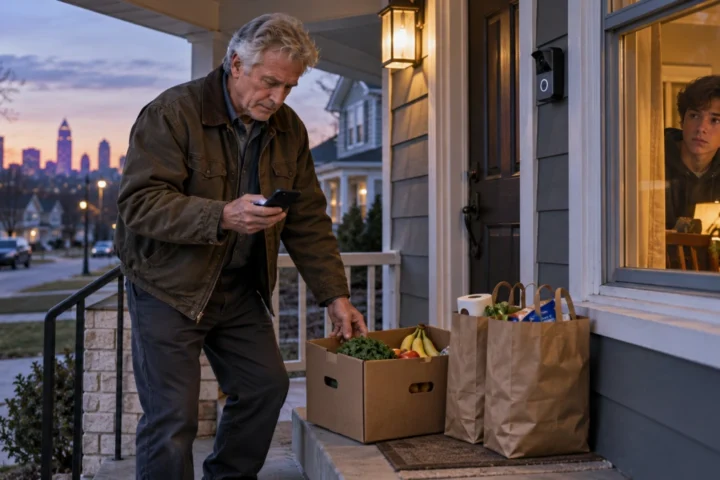
In the video, I was lifting two grocery bags from Mrs. Walsh's porch. The caption read: This man has been stealing from our neighbors for months.
“You told me you were helping people,” Owen said.
I set down my tool bag. Cleveland was turning dark outside our small house. I'd repaired two washing machines that day. Nothing had made my hands feel as heavy as the phone he was offering.
“I was helping.”
“Then why does Megan say not to let you near anybody's house?”
The clip lasted fourteen seconds. It didn't show me delivering those bags to the house at the end of the street. It didn't include Mrs. Walsh's message from seven that morning, or the schedule explaining who was collecting what.
It also didn't show me setting down a new box before lifting the bags.
I called Mrs. Walsh. Voicemail. She was in the hospital, and her daughter had asked us not to call unless it was important.
Owen needed an answer he could take to school tomorrow.
I opened my old messages. There were names, addresses, and things neighbors had told us privately when asking for help. I closed the screen before he could read them.
“I'll prove what I did,” I said. “But I can't use somebody else's private life to do it.”
Then my phone vibrated. The woman who posted the video had just shared my home address in the neighborhood group.