Original fiction
On this page
The Song He Gave Away
I recognized the wrong note before I recognized my own voice.
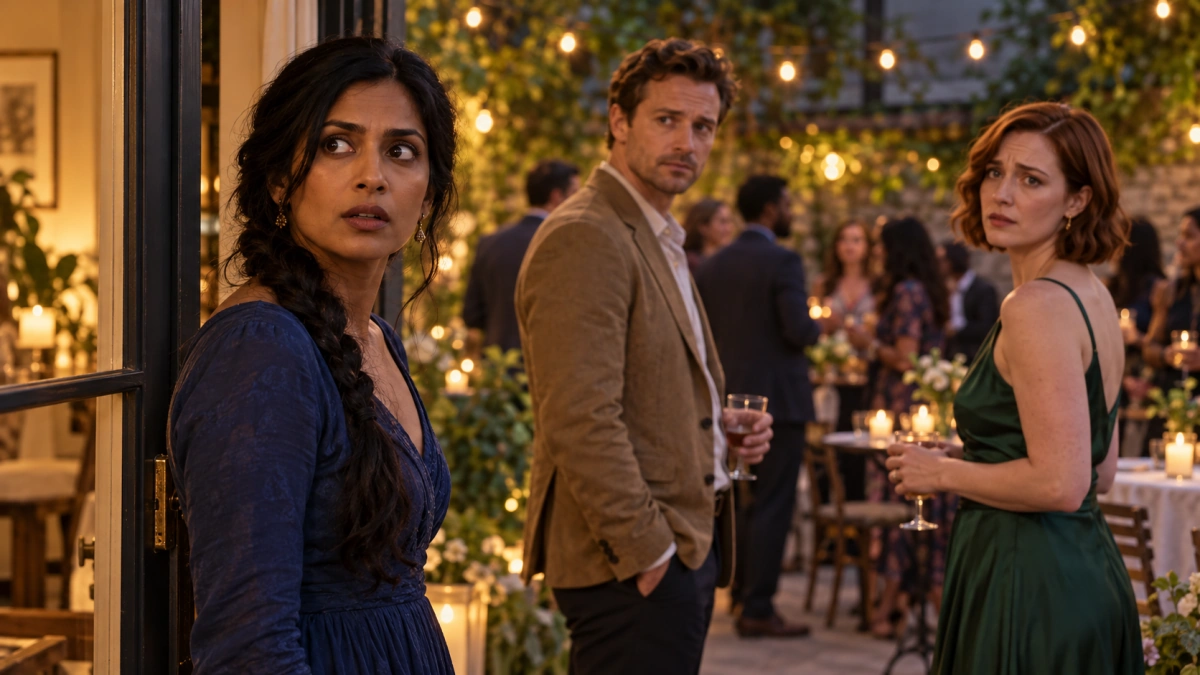
At my husband's cousin's engagement party in Nashville, somebody turned up a small speaker beside the courtyard door. Under the string lights, Elsie lifted her glass. Her auburn bob brushed the shoulder of her green dress.
"Graham made us something," she said.
My husband smiled in his tan jacket. I was reaching for a napkin when the piano began.
Four notes climbing. A pause I hadn't decided how to fill. Then the low E I had struck by accident because my hand was shaking that night.
It was my unfinished recording.
Not a song I had played for friends. Not something from my teaching website. A private file I had left on our household laptop after my own computer stopped working.
I turned toward Graham. He gave me a little nod, as though we were sharing a wonderful secret.
Then my voice came through the speaker.
"For Leena. I still don't know how to finish—"
I reached the table before the sentence ended and pressed the power button.
The courtyard fell quiet. Someone's ice shifted in a glass.
My sister had been dead five years. I had recorded those words alone, after midnight, believing that an unfinished thing could stay unfinished until I was ready.
Elsie's fiancé, Oscar, stepped away from the speaker immediately.
"Is something wrong with the file?"
Graham's hand settled between my shoulders. "Anika's emotional about this one."
I moved out from under it.
"Who did you send it to?"
He blinked. "It's just a gift."
"Who has it, Graham?"
Across the courtyard, a phone was still pointed toward the silent speaker. Elsie lowered her glass and went to ask its owner to stop recording.
Oscar unplugged the speaker without asking me to explain. That was the first kindness: he saw a problem and stopped making it louder. Elsie led the guest with the phone toward the kitchen. Graham stayed beside me, wearing the startled expression of a man whose surprise had received the wrong response.
"Can we go somewhere quiet?" I asked.
Oscar opened a side room used for coats. Through its window I could see a narrow strip of Nashville evening and a chair somebody had abandoned beside the recycling bins. I focused on the chair while Elsie closed the door. My hands had gone numb around the napkin.
"I'm so sorry," she said. "We thought you knew."
"She knew I loved the piece," Graham said.
I looked at him. "That's not the same thing."
He had heard me play part of it months earlier, through our bedroom wall. Afterward he had said it was beautiful. I had thanked him and gone to make tea. Nothing in that exchange had invited an audience, let alone an engagement party.
Oscar took his phone out. "He sent it to me Tuesday. I sent it to Dev, who brought the speaker. And to the video editor we're considering for the wedding. Just to ask whether it could work for an entrance."
My stomach dropped again. An entrance. A roomful of people walking into a future while my private words to my dead sister played behind them.
"We won't use it," Elsie said. "Not here, not at the wedding."
"Please ask them not to send it anywhere else. And don't explain the dedication. Just say it was private and sent without permission."
She nodded. No question about what Leena had died from, no invitation to justify my grief. I could have loved her for that if I had possessed any spare feeling.
Graham said nobody had meant harm. I asked him whether he had said he wrote it. He looked toward the closed door, where party sounds had resumed cautiously, forks and lowered voices.
"I said I'd put something together for them."
"And when they thanked you for composing?"
He rubbed his jaw. "I didn't correct it."
Elsie drew a breath. Oscar sat on the arm of a chair rather than leave me standing beneath three people. I noticed these details because the larger thing was still too difficult to look at directly.
I was thirty-six. I taught piano in rented practice rooms, in children's living rooms, on a keyboard with one sticky key at an afterschool program. People sometimes treated that work as preparation for a more impressive music career. Graham usually defended it. Now I wondered what he believed belonged to me once it was no longer earning an hourly fee.
"It isn't even finished," I said.
"That's why I thought you wouldn't mind. You weren't doing anything with it."
There are sentences that do not sound cruel until they land in the exact place where you live. I looked down at my indigo dress. I had sewn the loose button that afternoon while he wrapped a bottle of wine. At that hour, he had already known what the speaker would play.
Elsie asked whether I wanted a ride. I said yes. Graham began to say we had come together, then stopped. She found her friend Tessa, who hadn't heard the recording from the kitchen and didn't need to. Before leaving, I told Oscar I would contact him tomorrow about the known copies. Tonight I needed the sound to stop following me.
Tessa drove without filling the silence. Outside our house, she waited until I unlocked the door. Inside, I went straight to the laptop. The file sat in a folder called Piano drafts. Its name contained a date, not a title. I clicked nothing.
Leena had been twenty-nine when she died. Five years later, my memory of her laugh could still arrive more clearly than anything anyone had said that morning. We had shared a room as girls, fought over a hair dryer, pretended not to listen when the other cried. Our adult lives had become busy and separate without becoming distant.
The recording was not a complete portrait of her. It was one night when I missed the way she tapped a spoon against a mug to demand my attention. I had tried to turn that rhythm into something my hands could hold. Then I had spoken into the microphone, foolishly or bravely, because I thought only I would hear it.
Graham came home an hour later. I had packed a bag for my friend Rina's spare room. I wasn't leaving forever, I told him, and I wasn't promising to return tomorrow.
"I was proud of you," he said.
"Then why did they think you wrote it?"
He had no answer that could survive being spoken slowly. He started with the party, the family, the pleasure of giving something nobody could buy off a registry. I stopped him when he said we had given it.
"You took something you knew was private and made yourself generous with it."
He sat at the kitchen table. I took my own computer, now repaired, and a copy of my teaching schedule. Before I left, I asked him not to open my music folders again. We would sort out shared household files later. Tonight he could respect a sentence without requiring a technical barrier to make it real.
Rina's guest room smelled of laundry soap and the mint she dried on a windowsill. She offered dinner. I wasn't hungry until she set rice and eggs in front of me. Halfway through eating, I cried so hard I had to put the spoon down.
"Do you want me to be angry out loud?" she asked.
"Not yet. I can hear enough already."
She put a glass of water within reach and told me her washing machine had started making a noise like a helicopter. We talked about that for five minutes. It was merciful to inhabit a world where appliances were allowed to be the problem.
Sunday morning, Oscar sent a message asking when he could call. I chose noon. By then I had taught one online lesson and answered a parent's question about a recital. My work voice sounded astonishingly normal. After the call, I sat very still until it belonged to me again.
Oscar explained the route of the file. Graham to him. Him to Dev and the prospective editor. He had spoken to both. Dev had removed it from the playlist and his phone; the editor said she had not used it in a project and would delete her copy. Oscar and Elsie had deleted theirs after asking whether I needed any information first.
"I can't swear nobody else recorded the room," he said. "Elsie asked the person with the phone. She says she deleted that clip. We asked the guests not to share anything from that moment."
I thanked him for telling the truth instead of offering certainty he didn't have. We agreed that if another copy appeared, he would let me know and ask its holder not to distribute it. I didn't want an announcement that made more people curious about the dedication.
"We can just say private work was shared by mistake," he offered.
"Not by mistake," I said. "Without permission. You didn't know. Graham did."
Oscar was quiet, then said he understood. He asked whether a short message from Graham correcting authorship would help. Yes, I said, if it didn't quote me, name the private subject, or make the correction into another performance at my expense.
When we hung up, I took a walk around Rina's block. Nashville was warm enough for open windows, and somebody was practicing trumpet badly behind a screen door. I listened until they found the note. A private struggle, escaping by accident, did not feel like the same thing as being handed away.
Graham sent a draft that afternoon. It began, I'm sorry our surprise upset Anika. I read the sentence twice, then called him.
"It wasn't our surprise. And the problem wasn't my reaction."
He said he was trying to keep things brief. I said brevity was not the same as removing himself from the action. I would tell him what couldn't be included, but I would not write his apology for him.
An hour later, he sent another draft. He had shared Anika's private unfinished piano recording without asking. It was her work, not his. He had allowed people to believe otherwise and was correcting that now. Please do not use, reproduce, or forward it; contact him if a copy needed followup. He was sorry for the breach and would not discuss the recording's private content.
There was no mention of Leena. No quote of my voice. I said that version respected the limits I had named. He sent it to the same people who had received the file and to the family group where he had accepted praise. He sent me the actual message, not a promise to get around to it.
His aunt replied that married people shared things and surely he had meant well. Before I could decide whether to answer, Graham wrote back that being married hadn't given him permission. The conversation stopped there. It did not turn into a trial where relatives voted on how much privacy I deserved.
Monday brought work. A seven-year-old named Felix refused to play anything except the first line of a movie theme. His mother apologized from the doorway. I asked him to play it slowly enough that the left hand could join. He scowled, tried, and grinned when the notes lined up.
"Can I show Grandma?" he asked.
"It's your practice. You can choose who hears it."
The sentence scraped something inside me. I kept my voice easy because Felix had done nothing wrong. Afterward, in my car, I sat with both hands on the steering wheel until I could drive to the next lesson without crying.
That evening I returned home to collect more clothes. Graham had made soup. The kitchen looked aggressively cared for: counters wiped, groceries lined up, flowers in the vase Leena had given me. I stood in the doorway and felt anger rise so sharply I had to breathe before speaking.
"Did you think this would make it easier for me to stay?"
"I thought you might be hungry."
I believed that part. I also believed he wanted the house to speak on his behalf. We could contain more than one motive, but I wasn't ready to eat inside his effort. I took a container to Rina's and washed it before returning it later. Accepting soup was not accepting his explanation.
He asked what I wanted him to do. I told him to manage the followup on the copies, stop calling the file a gift, and find a place to stay if I decided I needed my own home back. He flinched at the last request. I did not soften it with a deadline for forgiveness.
Three days later, I moved home. Graham arranged to rent a room from an old coworker across town, paying from his own income. We kept ordinary household bills visible and discussed who would cover what while we lived apart. Nobody emptied an account or left the other guessing whether the lights would stay on.
He left his house key in a bowl because I asked him not to arrive unannounced. That felt more intimate than the party had, in a painful way. It was a small metal acknowledgment that being my husband did not mean entering every space whenever he wished.
Alone, I moved my drafts to my own computer and changed its password. We separated the shared household folder from my work. I did not pretend a password could repair trust. It could only stop asking trust to do the job of a boundary that should have existed already.
For a week, I didn't play the demo. I taught scales, bought peaches, argued with a billing error, and called my mother about a recipe. She heard something in my voice and asked whether Graham was away. I said we were having a difficult time and I wasn't ready to explain all of it.
"Do you need me there?"
"Not tonight."
"Then call when you do."
I was grateful she didn't make worry into a reason to ask again. Leena would have made a joke about everyone in our family learning new tricks. The thought made me laugh, then cry, then finish washing the rice. Grief was not orderly enough to wait until the marital problem had been settled.
On the second Friday, Elsie asked whether I wanted to meet somewhere that wasn't connected to the party. I chose a garden center with a coffee counter. She arrived alone, wearing old jeans, and bought a plant she admitted she would probably overwater.
"You don't owe us music," she said after we sat down.
I hadn't known how much I needed to hear that. I had been imagining a strange future in which withholding my recording made me the person who ruined their engagement memory. She said the party had still contained toasts, cake, a bad dance by Oscar's uncle. They could keep the good parts without keeping what wasn't theirs.
"Did Graham tell you why he did it?" she asked.
"He wanted to be generous."
Her mouth tightened. "With something that didn't cost him anything."
It had cost him a great deal eventually, but that hadn't been his intention. I watched water run from a hanging basket onto the concrete. She didn't ask to hear the piece again. She didn't ask about my sister. We talked about her work at a bakery and whether wedding shoes needed to be beautiful if nobody could see them.
Before we left, she told me Oscar had chosen ordinary licensed background music from a service the editor used. No special replacement from me, no request that I bless it. Their wedding could proceed without borrowing my grief, and I could remain a person they liked rather than a lesson they had learned.
At home, I opened the piano lid. Dust marked the edge where my hand usually rested. I played the four climbing notes and stopped before the low E. Then I struck the wrong note deliberately. It sounded ordinary, almost comic. The room did not collapse.
I tried the phrase again, this time moving left where the old recording had moved right. Nothing profound happened. I disliked the result and wrote it down anyway. For years I had treated finishing as if it might close the door on Leena. Now someone had opened a door without asking, and I had to decide which doors still belonged to me.
I did not finish that night. I made a recording with no spoken introduction, listened once, and saved it under a new date. The original stayed in a private folder. I didn't need to destroy it to prove I could make something else.
Graham and I met the following Sunday in a park near a baseball field. Children argued over whose turn came next. He said he had been thinking about how often he called my music a hobby in conversations where he wanted to sound modest on my behalf.
"I didn't want people asking why you weren't famous," he said.
"So you answered a question they hadn't asked by making the work smaller."
He nodded. He had also liked the way people looked at him when they thought he had composed something. That was harder for him to say. I let the silence remain after it, instead of congratulating him for finally admitting the thing his actions had already told me.
He said he wasn't asking me to teach him how to behave. He had scheduled an individual counseling appointment and wanted to understand why admiration had felt worth more than my trust for that moment. I said I hoped he did the work whether or not I stayed married to him.
"I do too," he said.
We walked around the field once. I asked whether there had been any new copies. None reported. Dev and the editor had confirmed the requests again. Graham would tell me if that changed. I asked him to stop giving me daily updates when nothing had happened. I wanted evenings that didn't contain a progress report about the worst sound I had heard in years.
The next week, a student brought me an unfinished song about her dog. She was fourteen and embarrassed by every line. She said she might put it online so at least she would be forced to finish. I asked whether an audience was the kind of deadline she actually wanted.
She considered that, then asked if she could play it just for me. I shut the practice room door. We spent half an hour working on the bridge. I did not tell her my story. Her uncertainty did not need to become a vessel for mine.
Driving home, I realized I wanted to book a recording room. Not because the private file had become public property, not to produce a better version for the same people. I wanted an hour in which the piano sounded clear and nobody in the next room needed dinner or an explanation.
The session cost a hundred eighty dollars. I paid from my teaching income, after checking that the month could hold it. There was nothing glamorous about the room, just scuffed flooring and headphones with one replacement pad. The engineer, Bea, asked what I wanted to capture. I said a new piece, still becoming itself.
"Want the talkback off while you work?"
I said yes. For twenty minutes I played without watching another person's face. I kept one rhythm that reminded me of Leena's spoon, changed the harmony, and let the ending arrive softly rather than resolving everything. It wasn't a translation of grief into something useful. It was music, made by a woman who could miss her sister and still choose a chord.
Afterward, Bea asked how I wanted the files delivered and what should be kept at the studio. We agreed on the practical arrangement before she sent anything. The questions were ordinary professional questions. They made me feel neither fragile nor difficult.
I listened in my car with the engine off. There was no dedication in the recording. That didn't mean Leena had been removed. It meant the words I had spoken alone remained mine to keep. I cried a little, then noticed I was hungry and bought a sandwich on the way home.
On Saturday I took my oldest keyboard to the repair shop. The sticky key from the afterschool program had finally stopped returning at all. The technician let me watch him remove the cover, revealing dust, worn contacts, and a small plastic clip that looked too ordinary to have caused so much frustration.
"Sometimes people hit harder when it stops responding," he said. "Makes it worse."
I laughed, then told him I wasn't laughing at him. He shrugged pleasantly. He had heard stranger things in a room full of broken instruments. While he worked, I examined a secondhand upright near the window. Its finish was scratched where someone's belt buckle must have rubbed against it for years. I played a scale very softly.
A little girl waiting with her father came closer. She asked whether I knew the song from a cartoon I had never seen. I admitted I didn't. She sang three uncertain notes, and I found them. Her father smiled without taking out his phone. For a minute we made something that existed only in that shop, between a damaged keyboard and a piano nobody had bought.
At home, I told Rina about it while she returned a book she'd borrowed. She said she had never understood why people assumed music needed to travel everywhere to be worth making. Then she asked if I wanted company while I listened to the new recording. I said not yet. She accepted the answer and helped me carry groceries upstairs instead.
Graham came the next afternoon to collect a toolbox he needed at the rented room. We had agreed on the time. He knocked, although he knew I was inside. At the kitchen table, he saw the recording room receipt and looked away before asking anything.
"You can ask," I said. "I might not answer."
He smiled sadly. "Did you like the piano?"
It was a question about my experience, not about when he would be allowed to hear the result. I told him about the clear bass notes and the worn headphone pad. He listened without trying to turn the conversation toward the party. Then I asked how the rented room was working.
The mattress was too soft. His coworker woke early. He missed our kitchen. He gave those facts without using them to request anything. I was relieved, and irritated that relief still required such modest conditions. We sat with that discomfort until he stood to leave.
Before he went, I asked whether he had listened to the file before sending it. He said yes. All of it. For weeks, a small part of me had kept inventing the possibility that he hadn't heard the dedication. His answer closed that escape.
"I thought the words made it more meaningful," he said. "I didn't stop to ask meaningful to whom."
I gripped the table edge. He didn't reach for my hand. We were finally looking at the same action, and it was worse than the softened versions. He had not accidentally brushed against my privacy. He had recognized intimacy and mistaken it for value he could transfer.
After he left, I stood at the sink until the pressure in my chest eased. I didn't play the new recording to drown the feeling out. I let the afternoon remain difficult. The decision to make music again could not require every day afterward to become inspiring.
That night I cooked the recipe my mother had described and burned the onions because I answered a student's message at the wrong moment. I ate around the dark bits. My life was not suspended until the marriage became clear. There were meals, small mistakes, appointments, and music waiting without demanding an immediate answer from me. I could live among them while trust took whatever time it took.
At the end of June, the neighborhood library asked whether teachers could contribute short performances to an evening for adult learners. I had already agreed to help arrange chairs. I asked if there was room for one original piano piece. There was no fee beyond the small event budget, no industry contact waiting in the audience, no promise that anyone would remember it next week.
I chose a title, Window Open, and wrote my own short introduction. The program would credit Anika Shah. It would not mention my marriage or describe the music as a tribute. Those parts of my life could exist without becoming marketing material for the next part.
I practiced the introduction at the kitchen table, where nobody could mistake the pause for an invitation to supply my story. Saying my name felt awkward the first three times. On the fourth, it sounded like a fact rather than a defense. I folded the paper into my music folder. There would be enough to carry that evening without bringing an explanation of every silence, every changed chord, every person I still loved and every thing I had not forgiven.
I told Graham about the performance after the choice was made. He asked whether I wanted him there. I said I didn't know yet. He said he would wait for an invitation, and he did. No flowers arrived, no relative called to tell me how much it would mean to him.
That waiting did more than any speech. I was not forced to spend my energy defending an unanswered question. Two days before the event, I invited him. I told him not to record. He said yes without adding that he wanted a memory, without negotiating a private exception.
We had one joint counseling session before the performance. I said I still heard his hand on my back when I remembered the party, the way he had explained my reaction instead of his action. He said he had wanted everyone to stay comfortable, especially himself. He apologized for that sentence without asking me to replace it with a kinder memory.
When the counselor asked what repair would look like outside that room, I said there would need to be days when I wasn't a project. Graham said he could respect a no without turning it into evidence that nothing he did mattered. Neither of us promised the result. We scheduled another session, then left in separate cars.
The library evening arrived during a thunderstorm. Rina helped carry a box of programs under her jacket, and Elsie and Oscar arrived damp from the parking lot. My mother sent a message wishing me good hands, which was what she used to say before childhood recitals. I read it twice before putting my phone away.
Graham sat near the back. He didn't look wounded by the distance or try to catch my eye until I looked toward him. His hands rested empty in his lap. It was a modest thing to notice at a concert. It was also the reason I could take my place at the piano without first searching the room for a raised phone.
I introduced the piece by its name. I said I taught music around the city and was glad to play something I had been working on. Then I let the first note arrive. The library piano had a brighter upper register than the recording room instrument. I adjusted my touch and kept going.
Halfway through, rain struck the windows hard enough to become another rhythm. For a moment I thought of Leena tapping her spoon, impatient for attention. I didn't have to tell the room why I smiled. They were allowed to hear music without receiving every private thing that had made it possible.
The ending was quiet. Somebody coughed before the applause. There were twenty-seven people, perhaps fewer if the children at the coloring table didn't count as listeners. Nobody stood up in astonishment. A woman asked afterward whether I taught beginners who were over sixty. I gave her my contact card and meant every word when I said yes.
Elsie hugged me after asking if I wanted one. Oscar thanked me for inviting them, not for giving them a song. Rina stole the last oatmeal cookie and divided it with me beside the program table. These small exchanges returned the evening to its human size.
Graham waited until I had put my music away. "I liked the way it ended," he said.
"It's different from the old one."
"I know. You don't have to explain it."
We carried chairs together. He asked where to put them, and I pointed toward the storage room. The work was ordinary, almost dull, which helped. There was no scene in which he earned the right to come home by lifting enough furniture.
Outside, the rain had stopped. Eight weeks had passed since the party. We still lived separately. The original recording remained private, as far as the known copies could be controlled. I could not make myself unheard by every person in that courtyard. I could refuse to let that uncertainty choose everything I made next.
Graham asked if I wanted to walk to my car together. I said yes. At the curb he stopped rather than follow me to the driver's door. We had dinner planned for Wednesday, somewhere quiet. That was what we had, not a restored marriage disguised as a date.
"Good night, Anika," he said.
I drove home alone. In the kitchen, I set the program beside my keys and opened a window. Somewhere down the block a radio played a song I didn't know. I listened until it faded, then sat at my piano and tried a new phrase. I left it unfinished when I was tired. Nobody else would decide what that meant.
Read next
The Address on Our Lease
The Divorce Party Invitation
The Ring at Reception
My Fiancé Asked Me to Hide My Son During His Mother’s Visit—Then I Found the School Form He Had Already Filled Out
Reading notes
A music teacher hears her private piano recording at an engagement party and asks who received the file.
This is an original work of fiction. Characters and events are fictional. Explore public-domain books at Project Gutenberg or browse more stories on ReadStoryvia.