Original fiction
On this page
The Key That No Longer Fit
Walter Reed knew the feel of a bad lock. For thirty years he had repaired doors in factories, apartment buildings, and nursing homes, and he knew when a cylinder needed graphite and when somebody had installed a different one.
This one was different.
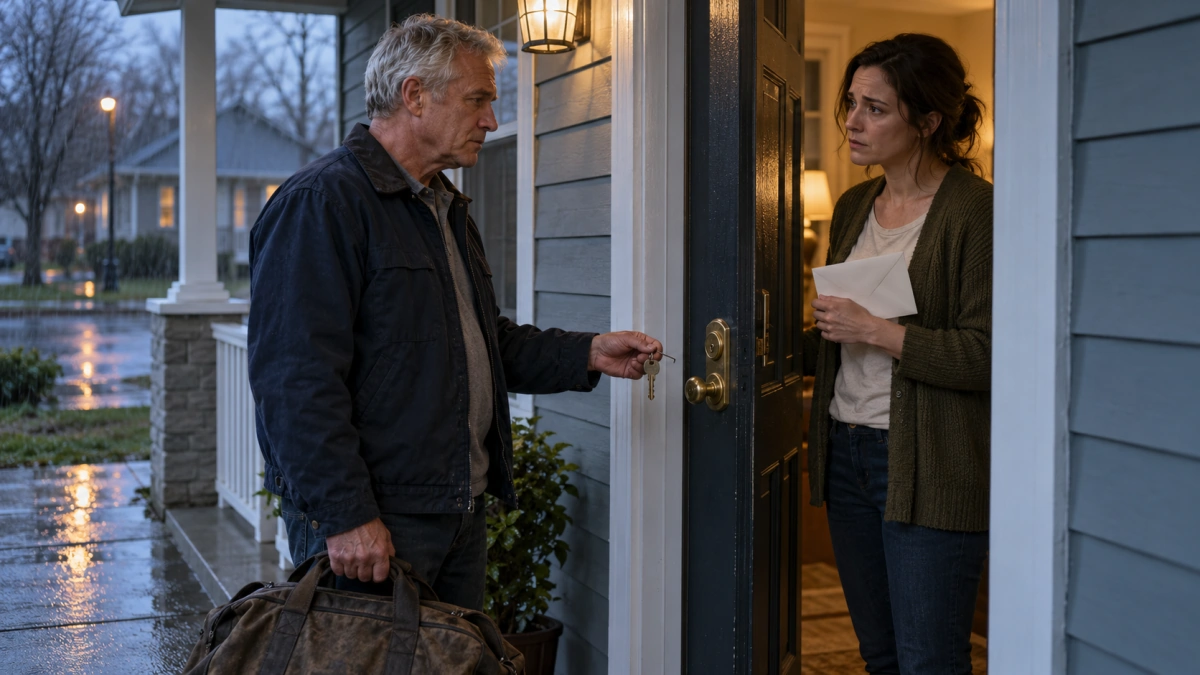
He stood on his Dayton porch with rain dripping from his navy work jacket and tried his key once more. Beside his boot, the brown canvas duffel sagged like something equally tired of traveling. Inside the house, his daughter switched on the hall light.
Nora opened the door only as far as the chain allowed. Her dark hair was tied back, and she wore the olive cardigan he had bought her last Christmas.
"Dad. You said tomorrow."
"Job finished early."
She looked at his key. He looked past her at the empty rectangle beside the stairs, where his mother's walnut cabinet had stood since before Nora was born.
"You changed my lock."
"I have a key for you."
She closed the door to release the chain. That small necessary movement hurt more than he wanted to admit. He had spent eleven nights sleeping beside an interstate so he could keep this house, and now his own daughter was making him wait outside it.
When she reopened the door, she held a plain envelope.
"Before you call Uncle Glenn," she said, "please let me explain."
Walter had not mentioned his brother.
From the kitchen came the steady clicking of the dishwasher. On the hall table lay a receipt from a locksmith and a photograph of the missing cabinet, its drawers standing open in somebody else's garage.
"Where is it?" he asked.
Nora did not offer the envelope again.
"That's what I was trying to find out when he used your spare key yesterday."
Walter stepped inside before taking off his wet boots. Nora moved away from the puddle they made, and he disliked himself for noticing that she noticed. He set the duffel against the wall. The house smelled of lemon detergent instead of the coffee he remembered leaving in the pot. Eleven days, he thought. A person should be able to leave for eleven days without coming home to an entirely different arrangement of loyalties.
"Give me the key."
She put the envelope in his hand immediately. His name was written on the front. Inside were two brass keys and a little cardboard tag bearing no address. Whatever else she had done, she had expected him to come home.
"The cabinet is at Glenn's," she said. "Or it was Tuesday. I took that picture when I went over. He wouldn't tell me where he intended to take it next."
Walter reached for his phone. Nora folded her arms, then deliberately unfolded them. "Please ask him what permission you gave. Not whether I'm being difficult."
That was such an accurate prediction of his opening question that he stopped. His brother had watched the house during assignments for years. Glenn mowed, checked the basement after storms, brought in packages. Since Walter's wife, Ellen, died, he had also started things Walter had not finished: sorting tools, scheduling furnace service, moving the Christmas boxes. Walter had called this help. Mostly it had been help.
Glenn answered from a noisy grocery store. "Back already? Good. We need to talk about that daughter of yours."
Walter turned off the speaker before Nora could hear more. The gesture made her look away. "Where's Mom's cabinet?"
"Safe. That's what I've been trying to tell Nora. It was getting damp against that wall."
"The wall by the stairs isn't damp."
"I meant generally. You said start making room."
He had said something like that. On Sunday, halfway through a twelve-hour shift in Indiana, Glenn had called about a neighborhood donation pickup. Walter remembered a jammed loading door, a supervisor waving, his brother asking what to do with the stuff nobody used. He had said, "Sure, start making room. Just don't throw away anything important."
Important had seemed like a sufficient category. Now he could hear how little it contained.
They arranged to meet the next morning. Glenn offered to come immediately, but Walter said no. It was the first refusal of the evening that did not require anybody else to hold a boundary for him.
Nora had made soup. He ate it standing at the counter until she said there were chairs. He sat, embarrassed. Across from him she pushed a printed sheet between the salt and the bread. It was not an accusation, exactly. It was a list.
Walnut cabinet. Green sewing tin. Two cartons from basement shelves. Ellen's winter coat. Small shop vacuum. One folding table.
"Some of those are yours," Walter said.
"The vacuum and the table. I bought them for the upholstery work. I told him that. He said you'd already decided."
At thirty-two, Nora repaired restaurant cushions and upholstered dining chairs from a rented corner of a shared workshop. She had moved home fourteen months earlier after a rent increase swallowed the margin she needed to buy equipment. Their agreement had consisted of one conversation, several jokes about not leaving dishes in the sink, and two hundred dollars a month toward utilities. Walter had told everyone she was getting back on her feet. He had never asked how it felt to have her life described as a temporary stumble.
"Why didn't you call me?"
"I did. Tuesday afternoon."
He checked. There were two missed calls beneath photographs of the loading dock and messages from his supervisor. A text from Nora read: Need to talk about Glenn taking things. Another, later: Please don't tell him to handle it before we talk.
His reply was a thumbs-up. He remembered sending it while eating a sandwich with one hand. It could have meant anything. To Nora it had meant he would call. To him it had meant he had seen the message and would deal with life when life became quieter.
"He came back yesterday," she said. "I was in the shower. I heard somebody downstairs. He'd brought a man to look at the dining room."
"A buyer?"
"A contractor. Glenn says the back room could be a bedroom if you ever stopped doing stairs. He wanted an estimate."
Walter stared at his bowl. He had mentioned his knees once, after climbing scaffolding for three days. His brother had turned a complaint into a floor plan.
"He said you wanted it," Nora continued. "He told the man not to mind my fabric rolls because I wouldn't be here long. I was standing right there. In a towel."
Walter set down his spoon. For the first time the changed lock looked less like a verdict against him and more like a door Nora had needed to close.
"I'm sorry," he said.
She nodded, but did not relieve him by saying it was fine.
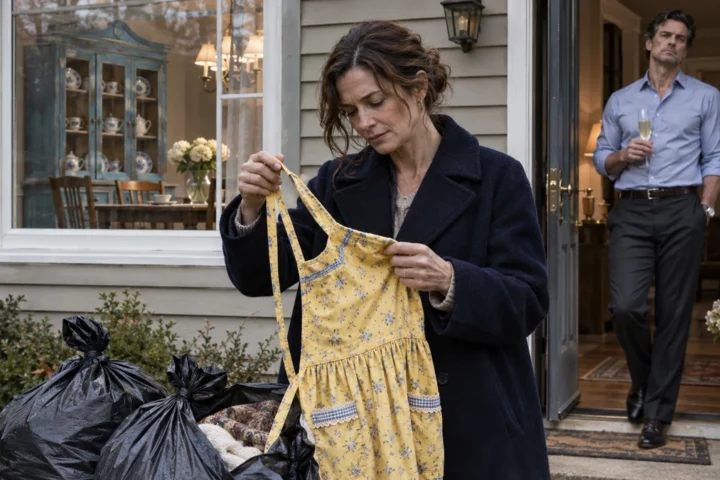
After dinner he went to the basement. There were clean rectangles on dusty shelves where the cartons had been. Beside the washer stood three bags marked KEEP in Nora's handwriting. He opened one and found an ordinary assortment: gardening gloves, Ellen's canvas apron, a paperback with a receipt tucked inside. The objects did not announce their importance. That, he began to understand, was the problem with giving someone permission to decide what mattered.
Upstairs, Nora was making up the sofa. "Why aren't you in your room?"
"The radiator's leaking. I turned it off and called the company you use. They can come Monday."
He had not known. She had not asked him to come home and fix it. Both facts bothered him differently.
He offered his bed. She said no. He offered to look at the radiator. She said tomorrow. Finally he asked whether she wanted another blanket. She did. He found the blue one without asking her where it was, and for a moment they were two people who knew the same cupboards.
Glenn arrived at nine carrying donuts and wearing his brown corduroy jacket. He was three years younger than Walter and had spent much of their childhood behaving as though the difference were a clerical mistake. Their father had worked nights; Glenn learned early to answer the phone, explain the bills, decide what their mother could manage. Being useful had become the way he entered every room.
He reached for the storm door, found it locked, and knocked with his free hand. Walter let him in.
"So we're doing this now," Glenn said, looking at the new cylinder.
"We're having breakfast. Then we're talking."
Nora put out three mugs. Glenn placed the donut box squarely over her inventory. She moved it aside without comment.
He admitted taking everything on the list except Ellen's coat, which he said had been in a donation bag already. The cabinet was in his garage. The sewing tin was inside it. The cartons were there too, although he had sorted some contents into separate piles. The vacuum had gone to his neighbor who cleaned rental units. The table was folded behind Glenn's freezer.
"I was saving you the trouble," he told Walter. "You keep saying you're tired."
"I am tired. That isn't permission to move my furniture."
Glenn's face reddened. "You said make room."
"I did. I shouldn't have said it like that. And you shouldn't have treated it as everything."
For several seconds the refrigerator motor filled the room. Nora watched her tea. Walter wished she would support him, then recognized that wishing as another small request that she manage his discomfort.
Glenn described an acquaintance whose father had fallen down basement stairs. He described the cost of moving things under pressure, the nuisance of finding contractors, the burden families inherited when older people refused to plan. None of these concerns were imaginary. They also did not explain bringing a stranger into Nora's home while she was showering.
When Walter said that, Glenn turned to her. "I didn't know you were upstairs."
"That's why you have to knock."
"It's my brother's house."
"It's where I live."
Walter heard how easily both sentences could be true, and how often he had used the first one to avoid considering the second.
He asked Glenn to bring everything back that afternoon. Glenn said the cabinet would need two men and a truck, neither of which appeared because someone snapped their fingers. Nora offered to rent a van, but Walter stopped her. "I'll arrange it. We can get the small things today."
Glenn pushed the donut box toward him. "You always liked having somebody take care of this stuff."
That landed because it was fair. Walter had let his brother become the household's spare decision maker, especially when grief made even replacing a light bulb feel like answering a question from Ellen. He had been grateful to find things done. He had not asked what those completed tasks cost anyone else.
"I did," he said. "I'm changing that."
Glenn left without a donut. At the door he said he would find the vacuum. It was not an apology, but it was an action that might lead toward one.
Nora began clearing mugs. Walter asked her to leave them.
"We have something else to talk about."
She sat slowly, already preparing a defense. He hated that he could see her preparing it.
"You should have changed the lock if you needed to feel safe here," he said. "But I needed a call that said that was happening. Even a message. Not me finding out in the rain."
Her eyes filled. "I thought you'd tell me to give him another key."
He could not honestly say she had no reason to think so.
"Maybe I would have. You still need to let me answer."
She rubbed the edge of the locksmith receipt. "I had the envelope ready. I wasn't keeping you out."
"I know that now."
"I wanted one day without having to make a case for being allowed to stay in the room I was already standing in."
He waited. She looked at the ceiling, then at him. "I should have told you. I'm sorry you came home that way."
His own apology arrived less neatly. He started with the difficult years, the work, how much there had been to manage after Ellen. Nora listened until he heard himself explaining instead of apologizing. He stopped and began again.
"I made you ask permission from two people when only one of them owns this house. I didn't notice how often I was letting Glenn speak for me. I'm sorry."
They did not hug. She washed the mugs. He dried. It was easier to stand beside an unfinished thing than to look directly at everything they had said.
When he reached for the towel, Nora asked whether she could say something unkind. He said she could say something true. She told him that sometimes his trips felt easier than his returns. While he was away, she could run the house without explaining each decision. When he returned, she became a daughter again before she became a person who knew how things worked. She missed him, and she dreaded the adjustment. Both feelings embarrassed her.
Walter dried the same mug until it squeaked. He wanted to list everything he had never forbidden. Instead he asked what might make returning easier. Nora suggested a conversation before each trip, and another afterward, about actual plans rather than who had failed to anticipate whose wishes. He said they could try that.
Then he told her he sometimes stayed on assignments longer because an empty passenger seat made going home harder. She had never known. Neither confession solved the lock, the cabinet, or the money. They did make the kitchen feel less crowded with motives neither person had named before. Nora handed him another mug, and this time he dried it once.
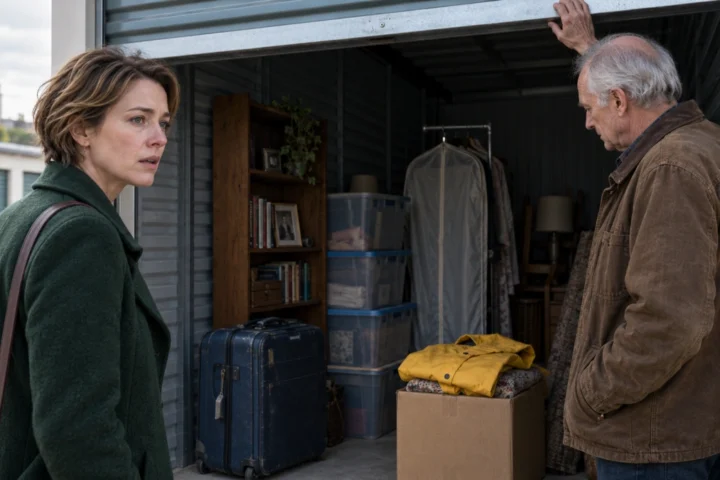
At Glenn's garage, Walter found the cabinet on a moving blanket between a lawn mower and a stack of tires. Its doors were secured with painter's tape. Glenn had protected it carefully. This made Walter angrier for a moment, because care complicated the simpler story he had been building on the drive over.
"I wasn't selling your mother," Glenn said.
"Nobody said you were."
"Nora looked at me like I was."
Walter examined a scratch on one leg. It was old. He knew it from childhood, when he had dragged the cabinet across their mother's kitchen to rescue a marble. "She asked where her things were. You told her it wasn't her business."
Glenn picked at the tape. "I thought she was stopping everything because she didn't want you changing the house."
"Did you ask her?"
His brother did not answer. Walter recognized the resemblance between them: both men could perform three hours of difficult labor to avoid ten minutes of uncertain conversation.
They carried cartons to Walter's car. In one he found Ellen's recipe folder, a box of old cassette tapes, and the first crooked birdhouse Nora made in school. In another were six empty photo frames and a broken humidifier. Important and unimportant had traveled together. He could not sort them on a driveway while his brother watched for signs of gratitude.
The coat was gone. Glenn had dropped three bags at a thrift store Monday. Walter thought of going there, of searching every rack, but could not even remember the last time Ellen wore that particular coat. His grief did not become smaller because he couldn't identify its lining.
"You should have asked," he said.
"I know."
It was the first time Glenn had said it without adding what he had meant.
On the drive home Walter pulled into a grocery parking lot and called Nora. He told her about the coat before she could discover it missing from the returned bags. She was quiet, then said there had been a grocery list in one pocket, written in Ellen's hand. Nora had kept meaning to take it out.
Walter gripped the steering wheel. "I can go look."
"You can. You don't have to make finding it the price of being sorry."
He went anyway, not because she demanded it, but because choosing to try was different from being assigned redemption. The store clerk let him check the coat racks. There were blue coats, brown coats, one pale green coat he briefly thought was right. None was Ellen's. He bought nothing and thanked the clerk for her time.
At home he told Nora the truth. She closed her eyes, then went back to cutting fabric. A loss could remain a loss even after people began behaving better. He would have preferred a lesson with a recovered object at the end. Instead there was an empty hook by the basement stairs.
Sunday afternoon, the cabinet came home in a rented van driven by Walter's coworker Ben. Glenn helped lift it onto the porch. Before they crossed the threshold he looked at Nora. "Where do you want us to put it?"
"Ask Dad," she said. Then, after a moment, "But please put a blanket under it until the legs are dry."
Walter chose the original place. He might someday choose another. The important thing, he realized, was not keeping the cabinet forever against the same wall. It was retaining the right to change his mind without somebody treating that right as an obstacle.
Glenn returned the table and the vacuum. The neighbor had emptied the vacuum and replaced a cracked attachment. Nora thanked Glenn for retrieving it, but did not thank him for its unauthorized trip. He seemed to understand the distinction, although understanding made him uncomfortable.
Over the next week Walter worked local shifts. Each evening he and Nora opened one carton. They kept a notebook with three columns: Walter, Nora, decide together. A fourth, ask Glenn, appeared when they found their mother's silver cake server. Walter added it himself. Ownership did not require pretending his brother had never belonged to the family.
Nora claimed the sewing tin. Inside were buttons, bent needles, and a receipt from a fabric store that no longer existed. Walter asked whether she wanted every object or only the tin. "I don't know yet," she said. He wrote her name without asking her to decide faster.
They found Ellen's handwriting on the back of a photograph, but not the grocery list. Nora touched the ink with one finger. Then she tucked it into an album instead of presenting it as a replacement. Walter was learning that some gestures were allowed to be small.
Monday's radiator repair revealed a worn valve rather than a disaster. Walter stayed out of the technician's way with visible effort. Nora paid the invoice from her account and he said they should discuss that, not because she was incapable of paying, but because a house repair shouldn't become an unspoken rent increase. They put it on their list.
The list grew practical enough to be frightening. Utilities. Overnight guests. Notice before entering bedrooms. Storage in the garage. What happened if Nora's business failed, or succeeded, or she met someone and wanted to leave. Walter had imagined that a father could demonstrate generosity by refusing to write things down. Nora explained that uncertainty could feel like a debt with no balance shown.
"I never meant you to feel you owed me your whole life," he said.
"I know. But when everyone says how lucky I am, I don't know what I'm allowed to ask for."
He looked at the kitchen window, where Ellen had once kept three pots of basil. "I don't know what I'm allowed to ask for either. I don't want to live alone yet. That's not the same thing as wanting you stuck here."
It was the first time either had said that so plainly.
Before they wrote anything final, Nora asked him to come to her workshop. He had delivered lumber there twice, always staying in the loading area because the machines sounded expensive and everyone seemed busy. This time she took him past the freight elevator to the corner she rented. A mustard armchair stood on blocks. Beside it hung restaurant booth covers, labeled with dates and measurements. Her name was on the invoice board, not beneath anyone else's. Walter realized he had never pictured her working without picturing her struggling.
She showed him the missing table's place beside the cutting bench. Without it she had spread material on the floor, hurt her back, and lost half a day. The vacuum wasn't household clutter; it kept old padding dust away from finished fabric. He had understood both objects only by their appearance in his garage. Here they belonged to a sequence of work he had never bothered to learn. He asked what the interrupted order had cost her. She gave him a number, then said she wasn't asking him to pay.
"I know," he said. "I wanted to know what happened."
That answer seemed to release something in her shoulders. She let him watch while she pulled fabric around an arm, making a smooth curve from material that had looked too stiff to bend. He thought of all the times he had told Glenn she was trying a little business. Little was supposed to make her risk sound manageable. Perhaps it had made the business sound disposable instead. He asked whether she wanted him to tell people she was an upholsterer. She said that would be a reasonable place to start.
On the way out they met her workshop neighbor, a woman carrying two repaired lamps. She asked Nora whether the delivery problem had been solved. Nora said it had. She didn't introduce Walter as the solution, or explain what had happened. In the car he thanked her for showing him around. She said she had invited him before. He could remember the invitations now: an open studio Saturday, a photograph of a finished booth, a message asking if he wanted to stop by. He had mistaken invitations to know her for reports about her progress.
That night he called the contractor Glenn had brought through the house. He kept the conversation short. No estimate was needed, and no further visit should be arranged through Glenn. The contractor sounded relieved rather than offended. He said he had wondered whether everyone knew about the appointment.
Walter apologized for the confusion without handing the man a family history. Afterward he told Nora exactly what he had said. She asked whether the contractor still had photographs of her room. Walter hadn't thought to ask. He called back and asked that those not be retained or used. An ordinary correction required two calls, not a speech about being a protective father.
They had their first argument about the agreement on Wednesday. Walter wanted the garage kept clear enough for his truck. Nora wanted a marked storage area that would not shrink whenever he brought home equipment. He heard her request as taking possession; she heard his hesitation as proof that nothing would change. For ten unpleasant minutes they used words like always and everything, which made a small garage feel as large as their entire history. Then Nora said they should stop until after dinner. Walter disliked stopping before winning, but there was nothing useful left to win.
After dinner they measured the garage with a tape he held and she read. The truck needed less room than he remembered. Her fabric needed protection from a shelf of leaking oil cans. They moved the cans, marked a rectangle, and left a clear path to the breaker panel. Neither got the whole garage. Both got a place they could describe without mentioning the other's character. Walter wrote the measurements down. Nora took a photograph. Their agreement began to look possible because it could include an argument and survive it.
On Friday Glenn called about Sunday dinner at their cousin's. He sounded almost normal until he said he hoped Nora wasn't still upset. Walter asked what he had done to find out. Glenn sighed. He said he couldn't apologize every time somebody mentioned the house. Walter said he wasn't asking for constant apologies. He was asking his brother not to use him as a weather report for Nora's feelings. If Glenn wanted to know whether she would welcome a conversation, he could ask her. And if she said not yet, dinner could still be dinner.
At the cousin's table, Glenn tried once to make a joke about needing an appointment to visit his own family. Walter set down his fork. Nora stayed still beside him. He could have laughed and explained later, the familiar economical route that made somebody else pay the difference. Instead he said appointments weren't necessary; asking first was. Their cousin offered more potatoes. Conversation lurched toward a broken dishwasher. Nothing dramatic happened, except that Nora did not have to defend herself while everyone ate. On the drive home she thanked him, and he said she shouldn't have needed to.
He also asked her not to make him a permanent referee. If Glenn ignored a refusal, he would support her. But he didn't want every future invitation or disagreement carried through him. Nora agreed, then pointed out that direct conversation only worked when her no remained no after she left the room. He promised not to undo it privately. Saying the promise aloud made him notice how often he had once soothed Glenn with phrases like she doesn't mean it. Sometimes she had meant it exactly. He had simply found her meaning inconvenient to carry.
The written agreement stayed on the table another two days. Nora changed one sentence about guests. Walter crossed out a sentence that made him sound as though he could inspect her room whenever he worried. They each kept a copy and put another with the house papers. Before signing, he asked whether she felt pressured to accept.
She said there was pressure in needing a place to live, and pretending otherwise wouldn't help them. But these terms were better than guessing. He listened without asking her to call the arrangement perfect. They were signing a workable beginning, not a certificate proving that either of them was good.
They drafted the final resident agreement in ordinary language and marked questions they wanted checked by someone qualified. Walter remained the owner. Nora would pay a fixed monthly amount they could both manage. Neither would move the other's possessions without asking. Either could request a conversation about changing the arrangement; neither would use a bad evening as notice to leave. They didn't pretend paper could make them kinder. It could make some kinds of unkindness harder to disguise as confusion.
Walter phoned Glenn before his next assignment. His brother answered cautiously. Walter said he appreciated the years of checking pipes and bringing in mail, but there would be no replacement spare key. They would ask for specific help, and Glenn could say no.
"So I'm a stranger now."
"No. A stranger wouldn't need this conversation."
Glenn was silent long enough that Walter checked the screen. Then his brother asked what would happen if the basement flooded while both residents were out. Walter said they would make an emergency plan with Nora, not use an imaginable flood to settle every question about entry forever.
"You think I've been running your life."
"I think I've been letting you do too much of it."
That wording did not absolve Glenn. It did leave him somewhere to stand besides the role of family enemy. He said he needed time to get used to it. Walter said he understood, and resisted adding that there was no hurry. There was a boundary already, even if feelings took longer.
Two nights later Nora came home with a lease offer for a small studio above the workshop. She put it on the counter with an expression Walter couldn't read. The old fear arrived immediately: he had finally learned the rules just in time for her to leave.
"Are you taking it?"
"I haven't decided. I wanted to tell you before I did."
He almost asked what was wrong with staying. Instead he asked whether the heat was included. She smiled, briefly, at the effort in the question. They read the offer together. The stairs were steep, the windows beautiful, the rent more than she could comfortably manage this winter. She would decline for now, not forever.
Walter did not celebrate. Staying was her decision, not his prize for a week of improved behavior. He told her he was glad she had choices. After she went upstairs, he stood a long time in the kitchen, letting gladness and fear occupy the same room.
When he left for Kentucky the following Thursday, Nora was already at work. On the hall table sat his travel mug and the new key on its plain cardboard tag. Beside them was a note: Call when you get there. Not so I can check. So I know.
He put the key on his ring himself. The old one remained in his pocket until the first rest stop, where he held it against the light and saw how ordinary it looked. A key could stop opening a door without proving that the people inside no longer loved you. Sometimes it meant they needed the door to work.
He did not throw it away. He placed it in the glove compartment, with receipts and a tire gauge, no longer a permission slip for anyone.
That evening Glenn texted Nora to ask whether she wanted the two porch planters he had stored over winter. She showed Walter the message during their call. Neither treated it as a miracle. She replied that Saturday would be good, after ten, and thanked him for asking.
On Saturday Walter came home for one night between jobs. The planters stood on the porch, empty and ready for soil. He heard Nora laughing on the phone inside. For a moment he waited, not because he needed permission to enter, but because he wanted to finish hearing that ordinary sound.
Then he used his key.
Read next

Mom’s Moving Day

The Name on the Baby Bracelet

The Stranger in the Will
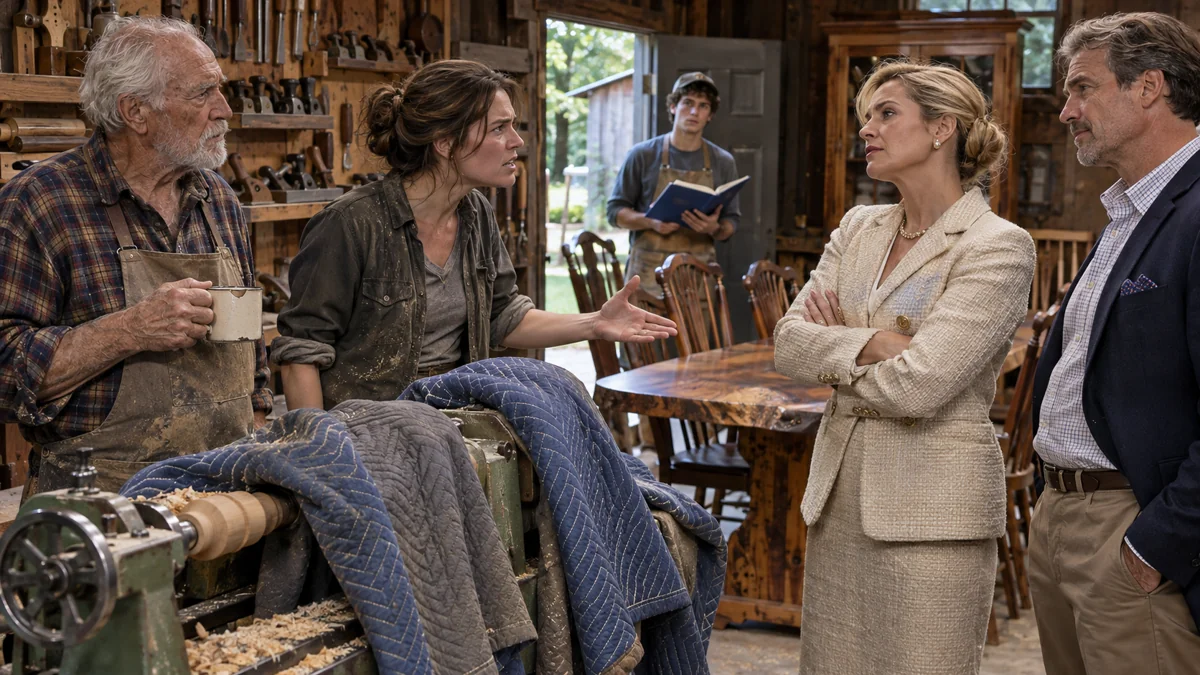
My Sister Gave Away Dad’s Workshop Before He Moved Out—Then His Apprentice Arrived with the Missing Order Book
Reading notes
A changed lock confronts a returning father with the difference between protecting someone and deciding for them.
This is an original work of fiction. Characters and events are fictional. Explore public-domain books at Project Gutenberg or browse more stories on ReadStoryvia.