The woman I found picking tomatoes in the abandoned plot knew exactly which ones were ripe, and the man who supposedly owned it had never received my warning.
I learned the second part after I had already promised his garden to somebody else.
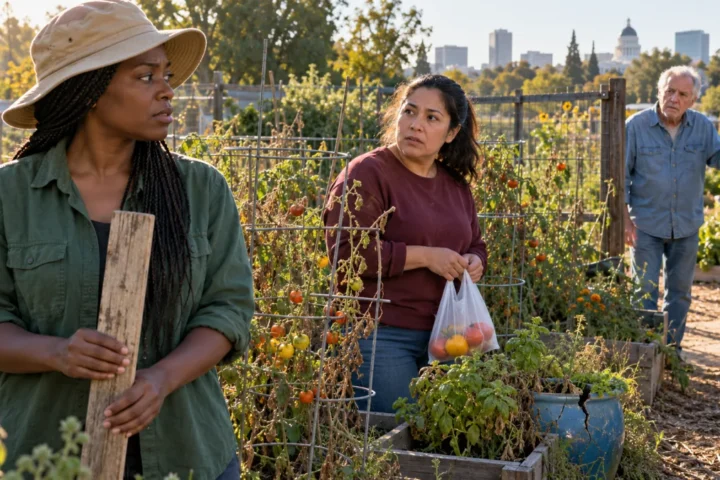
It was seven on a September morning in Sacramento. I had come to pull the little wooden marker from Plot Eighteen before the waiting family arrived. My spreadsheet called it inactive. The weeds along its edges agreed.
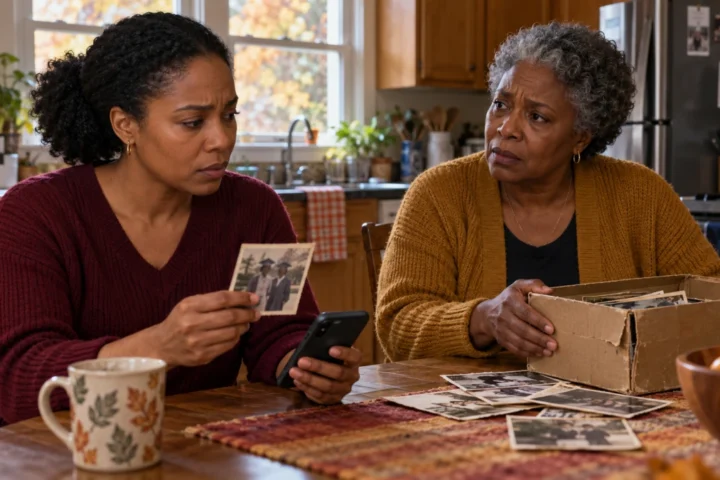
But a woman in a burgundy sweatshirt stood between the leaning cages, putting tomatoes into a grocery bag. She held one up when she saw me, as if I had come to help.
“The yellow ones split if you leave them another day.”
“Are you Walter Price?” I asked, although she plainly wasn't a seventy-four-year-old man.
She lowered the tomato.
My name was Amara Okafor. I was thirty-seven, three months into coordinating the garden, and determined to make its waiting list mean something. One family had waited an entire year. Meanwhile this plot had missed the spring workday, the summer cleanup, and every message I had sent.
“I'm Elena,” the woman said. “Ruth told me I could take what I needed.”
“Ruth Price died in January.”
“I know.”
Behind her, a tomato rolled from the bag and stopped against my shoe. I picked it up, feeling its sunless morning weight.
“Permission doesn't transfer the plot,” I said.
Elena looked toward the gate. A man with white hair and a faded denim shirt had stopped there, holding the fence instead of opening it.
“Nobody told me,” he said.
I still had the new family's name written on the back of Walter's marker.
The dog came into the laundry room carrying somebody else's sock, and by morning two strangers had thanked me for finding him.
Both knew the crescent of white fur under his chin. Both knew he hated the garbage truck and would eat a green bean only if you pretended it was yours. Both said the little terrier in my photograph belonged at home with them.
Arthur called him Scout. Vivian called him Pip.
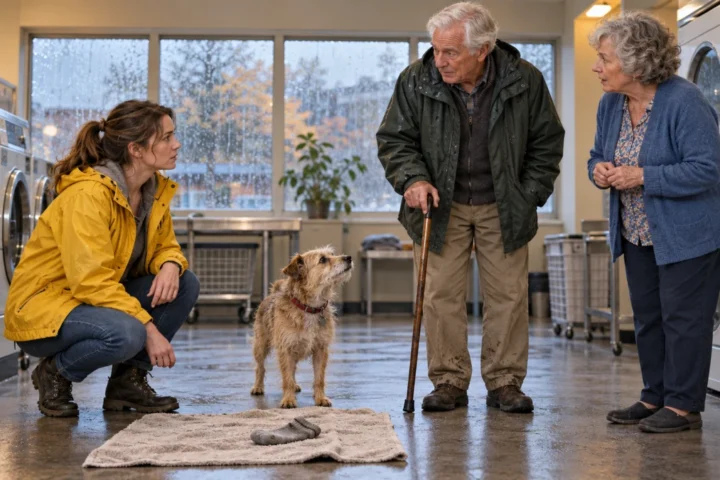
I was thirty-one, the maintenance worker at a Spokane apartment building with unreliable gutters, not a person qualified to divide a living thing between two lonely people. But the rain was coming sideways that Thursday night, and the dog had followed me through the service entrance before I could shut it.
His red collar had no tag. His white muzzle smelled faintly of peanut butter. When I crouched to read the worn buckle, he put the stolen sock in my lap.
I posted a photograph in the neighborhood group and gave him water in a clean paint tray. By seven the next morning, Arthur had sent me a picture of the same dog asleep against a woman's blue slippers. Vivian sent a veterinary receipt dated three weeks earlier.
Then Arthur arrived with a cane and a dark green jacket darkened further by rain. A woman in a blue cardigan came through the other entrance carrying a familiar red leash.
The dog scrambled off his towel. He ran to Arthur, sneezed against his knee, then turned and pressed himself against Vivian's ankles.
Neither person looked relieved anymore.
“Your son said you didn't want him back,” Vivian said.
Arthur closed his hand around the handle of his cane.
“He told me you wouldn't answer,” he said.
Someone had put a fern where Owen kept the photograph of his father.
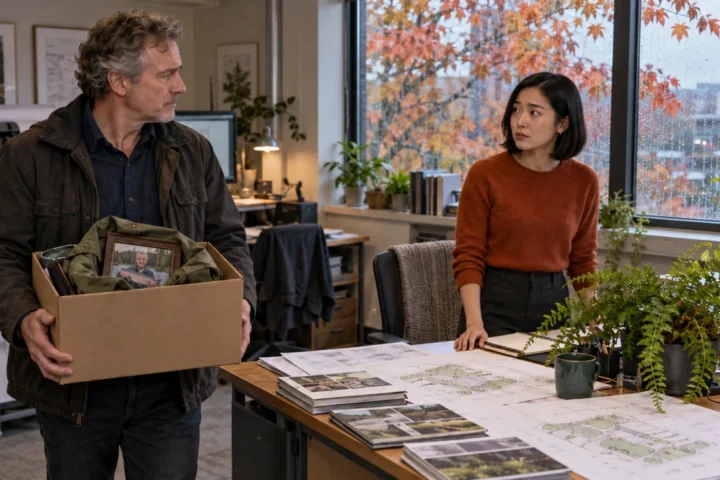
It was the first thing he noticed when he returned to the Portland office after eight weeks away. Not the new bid board or the stack of supplier catalogs. A fern, green and extravagantly alive, leaned across the window desk he had occupied for eleven years.
Behind it sat a young woman in a burnt-orange sweater.
"You must be Owen," she said, standing. "I'm Hannah. Paula said you'd be back today."
His father's photograph lay in a cardboard box beneath the coat hooks, wrapped in his old olive overshirt. The picture showed a man holding a salmon he had not caught; Owen had caught it, and his father had insisted on posing. During the last two months, Owen had helped that same man get from bed to bathroom without falling.
"That's my desk," he said.
Hannah looked at the fern, then at him. "Paula told me this was my permanent station."
Through the glass wall, their director lifted one finger to say she was on a call.
Owen stood holding the box. At fifty-two, he had expected returning to feel like stepping back into his own shoes. Instead, a twenty-seven-year-old stranger had her mug beside his window and a plan for the client account he knew best.
"I'm taking the Alder Commons tender through submission," Hannah said. "I was hoping we could review the drainage quantities."
Paula opened her door before he could answer.
"Wonderful. You've met. Owen, you'll be relieved Hannah kept everything moving."
He was not relieved. And the expression that crossed Hannah's face told him she had already understood that much.
The apology had no subject line. Rosa found it between a paper supplier's quote and a message about the church raffle, in the shared project mailbox Evan had asked her to cover while he took his mother to a medical appointment.
Malik, I should have stopped the meeting before they made you carry this.
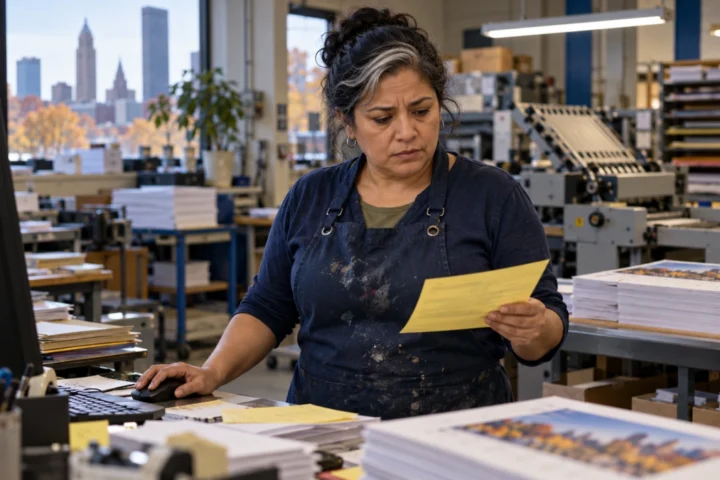
She took her hand off the mouse. Behind her, the folding machine slapped another stack of Cleveland school calendars into neat thirds. It had made that same sound the afternoon Malik cleared out his locker.
Rosa had not gone looking for secrets. The draft sat under the school job number, where a purchase order should have been. She read three lines before she understood what it was, then closed it. But she could not close the sentence in her head.
One month earlier, eight hundred calendars had gone out with the wrong dismissal times. Malik, twenty-eight, had been the last person at the press. Evan had said he ignored the approved file. Rosa had watched Beena, the owner, remove his name from the production board.
And Rosa had remembered a different file arriving after lunch.
She had kept that memory small. An attachment nobody asked her about. A hurried instruction. A thing she could not prove without making trouble for the manager who had recommended her for a bonus.
Now, at forty-six, with silver showing through the dark hair in her bun and ink on her navy apron, Rosa opened the job archive instead of the draft.
The first thing she found was her own handwriting on a yellow routing slip.
Use revised pages. Evan aware.
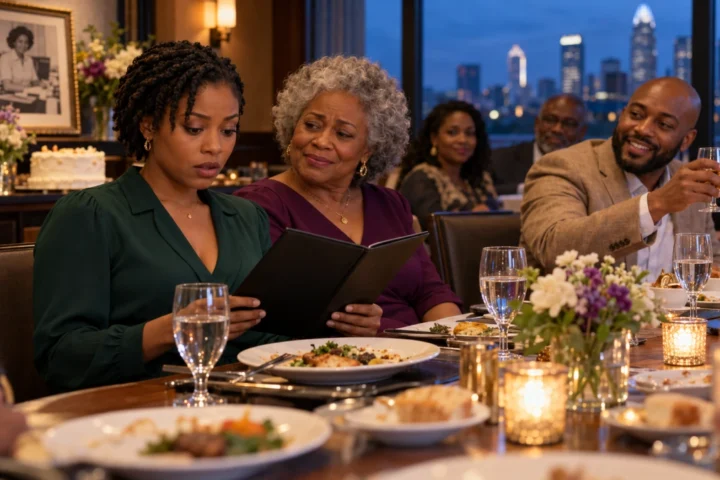
Brent lifted his glass before the waitress could set the black folder down.
"And to Talia," he said, "for treating us like royalty tonight."
Seventeen people turned toward me. My mother touched her silver curls and smiled from the head of the table. Behind her, the Charlotte evening pressed blue against the restaurant windows.
I had arranged the room. I had chosen the lower priced menu. I had brought the framed photograph of Mom on her first day at the hospital, wearing shoes so white they looked unfinished.
I had not offered to buy dinner.
The waitress placed the folder beside my water glass. Inside was a final total of $1,460. A smaller line showed the $200 deposit I had paid to hold the room. Balance due: $1,260.
Across the table, Brent was already reaching for the last crab cake. He wore the tan blazer he saved for pictures. He had added five people to the reservation three days earlier and told me not to worry about the details.
Mom saw the bill before I closed it. Her smile stayed where it was.
"It's such a beautiful thing you're doing," she said quietly.
I was thirty two, a hotel banquet coordinator with a good blouse and a savings account named COURSE. The certification application closed Monday. Tuition was due at enrollment, and the money in that account was almost exactly what remained on the bill.
The waitress leaned down. "Would you like me to bring the card machine?"
My mother put her hand over mine. For a moment I thought she was going to explain.
"Don't make it awkward," she whispered.
I moved my hand carefully out from under hers.
"Please bring another chair," I told the waitress. "We need to talk about how this is being paid."
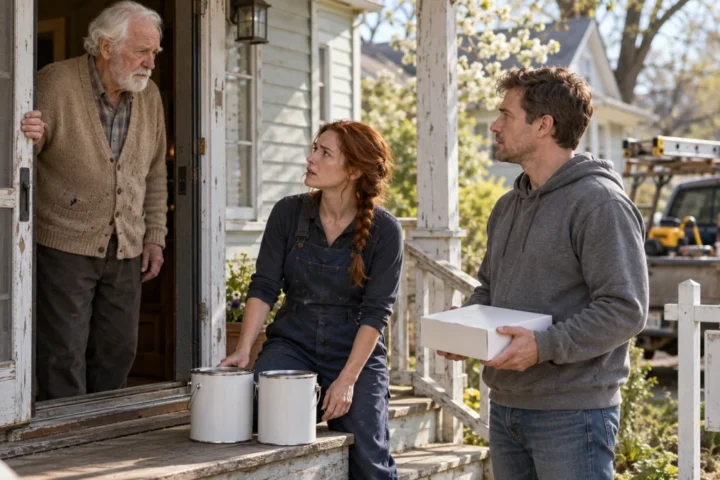
The sale sign was already in the yard when Mae backed her truck against the curb. In the bed lay two gallons of porch paint, a rented sander, and the ladder our father had finally agreed not to climb.
I had brought doughnuts. That was the sort of son I could afford to be that Saturday: generous with twelve dollars, useless with a mortgage.
Mae sat looking through her windshield. Then she got out in her navy overalls and walked past me without taking the box.
Dad opened the screen door. His tan cardigan had a hole near the wrist, and his white beard was damp from shaving.
"I should have called," he said.
"Before or after they put that up?" Mae asked.
Across the street, somebody's sprinkler clicked over wet concrete. I noticed the little red flag on the sign, the cheerful invitation to come inside on Sunday. Strangers would be walking through the room where our mother had died. They would open cupboards, discuss light, and decide whether our lives smelled like old carpet.
"It's my house, Ellis," Dad said, although I hadn't spoken.
That frightened me more than the sign.
In my coat pocket was a message from the man who had lent my restaurant money. He wanted a date, not another explanation. For months I had comforted myself with something Dad said whenever the roof needed work: Your house someday. Both of you.
Mae put the paint on the bottom step.
"Where are you going?" she asked.
Dad reached behind the door for a rental brochure. The picture showed a low brick building with handrails along its paths.
"Somewhere I can get to the bathroom without stairs."
Only then did I notice he was holding the doorframe instead of standing on his own.
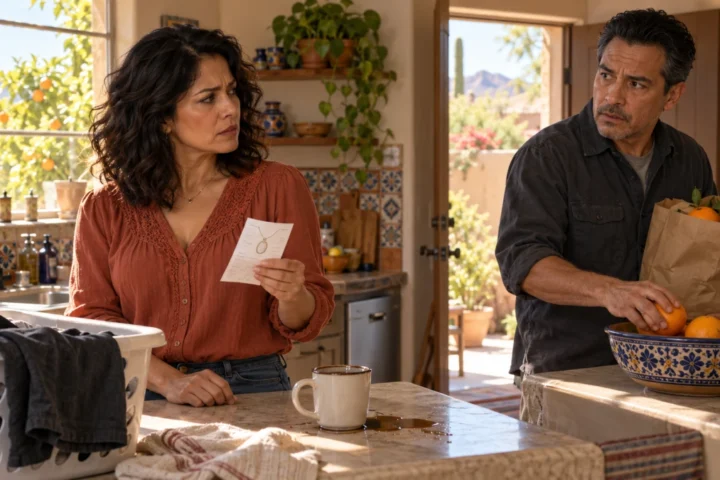
The necklace on the jeweler's receipt wasn't Marisol's. She knew that before she saw the date, before she saw Daniel's name, before the coffee began spilling over the rim of her cup onto the counter.
Twenty years married that morning, and her husband had paid to repair a gold pendant she had never worn.
She found the receipt in his charcoal shirt while sorting laundry in their Tucson kitchen. The drawing was simple: an oval pendant, a small flower pressed into its face, a broken clasp circled in blue. She recognized the flower from a photograph of his mother. That made the discovery worse in a way she couldn't yet explain.
Daniel came through the back door carrying oranges from their neighbor's tree. At forty-five, his black hair had begun to gray at the temples. She usually loved that detail. This morning she noticed how young he looked when he saw the paper in her hand.
"Is this my anniversary present?" she asked.
"No."
One clean answer. Then nothing.
Marisol was forty-three. She had known about Eva since their third date: his daughter from a relationship before their marriage, now twenty-five, living a life Marisol mostly encountered in birthday messages. Last month, when Marisol asked whether he'd heard from her, Daniel had said no.
"Whose is it?"
He set the oranges down one at a time. "Eva's. My mother left it to her. The clasp broke."
That explanation ought to have settled something. Instead, he reached for the receipt, stopped, and said, "She isn't the reason I lied."
Outside, the irrigation timer clicked on. Inside, Marisol put the paper flat between them, smoothing it with both hands so he could no longer pretend it was only a necklace.
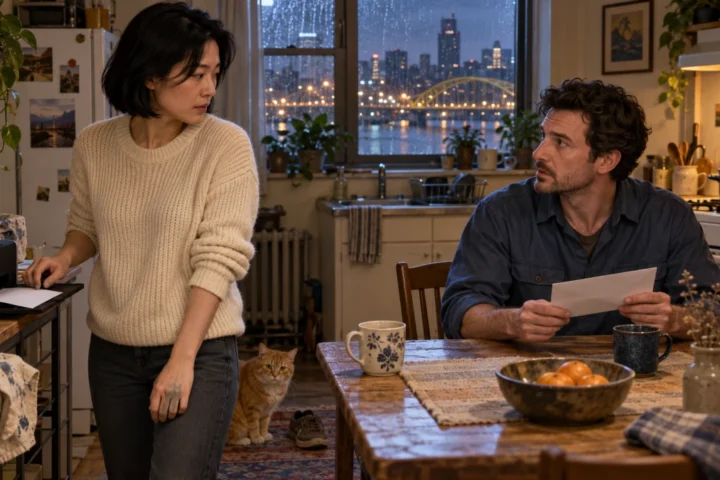
The printer spat out Lena's ticket while Adrian was taking off his shoes. She reached for it too late. Minneapolis lay faceup in the tray between a grocery coupon and the cat's bloodwork, and her husband stood holding an envelope from Baltimore.
For a moment, in their narrow Pittsburgh kitchen, neither of them offered an explanation. The radiator knocked. Clementine, their seventeen-year-old orange cat, put one careful paw on Adrian's abandoned shoe.
"You're going somewhere," he said.
Lena wiped clay from the side of her thumb. She had washed twice at the studio, but the pale crescent beneath her nail remained. "So are you."
He looked down at the envelope as though someone else had brought it home.
They had been married eight years. They knew the sound of each other's car outside, the precise angle of a headache, which drawer contained takeout menus and which contained things they couldn't discuss. They had become remarkably considerate people who no longer asked permission to be unhappy.
"It's six months," Lena said. "A residency. I accepted Friday."
"I signed Tuesday."
She had expected anger, maybe relief. Instead, Adrian set the envelope beside her ticket with the delicate care he used around wet pottery.
His promotion wasn't in Pittsburgh. Her residency wasn't something she could do on weekends. On the refrigerator, beneath a magnet from their honeymoon, their lease renewal waited for both signatures.
"When were you going to tell me?" they asked together.
That almost made her laugh. Then Clementine tried to jump onto a chair, missed, and landed with a small indignant cry. Both of them bent to pick her up. Their hands met under the same frail ribs, and neither knew who should let go.
The woman my mother said had abandoned us was standing beside her in a graduation photograph, holding her shoes.
I found the picture in a bent envelope while collecting material for our school's alumni display. Mom had graduated from the same Richmond high school where I now worked as a counselor. In the photograph she was eighteen, her gown lifting in the wind. Beside her stood my aunt June, sixteen, barefoot on the grass, carrying two pairs of heels and laughing at something outside the frame.
On the back, in Mom's handwriting, were four words: Couldn't do it alone.
I was thirty five. I had not seen June since I was two, and I knew exactly one story about her: when my mother needed her most, she left.
Then my phone lit up.
"Camille, thank you for the invitation. I'll come if you still want me. But does Denise know you asked?"
June's message sat beneath the cheerful email I had sent the night before. I had found her through an alumni contact and invited her to stand beside Mom at the opening. I had even described the display as a chance to bring our family together.
Mom came into the kitchen carrying a box of photographs. At sixty one, she still looked at school projects as something we should finish before dinner.
"Who are you writing?"
I turned the phone toward her.
She put the box down so hard that a corner split.
"You asked her without asking me?"
"I thought after all this time—"
"You thought you'd give me an audience."
I looked from her face to the two laughing girls in the picture. For the first time, the story I knew did not explain what I was holding.
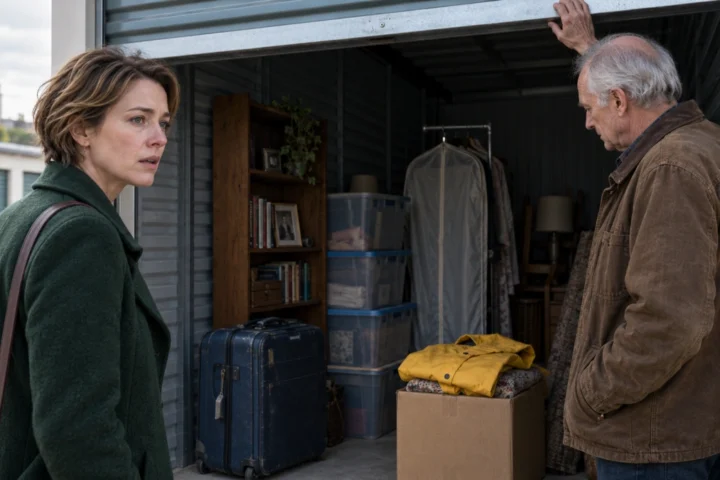
The storage manager handed Nora Bennett a pair of bolt cutters and asked whether she wanted to keep the wedding dress.
"What wedding dress?"
He checked the number on his clipboard. "Your father said the family was clearing everything today."
Nora looked at Russell. Her father stood beside the loading door with both hands buried in his brown jacket, although the Toledo morning was already warm. For eleven years, he had told her that unit forty-six held her brother's woodworking tools. For eleven years, she had pictured a table saw, the unfinished maple chair, the things Adam had left behind when a driver ran a red light.
She had come to help her father stop paying a hundred and eighteen dollars every month to keep grieving behind a padlock.
"We aren't cutting anything," Russell said.
The manager looked between them, set down the cutters, and went back inside.
Nora held out her hand. "You asked me to clear it today."
Her father took the key from his pocket.
When the door rattled upward, the first thing she saw was a blue suitcase. Not a saw. Not a chair. Behind it stood a narrow bookcase, three plastic tubs, and a dress bag hanging from a garment rack. A woman's yellow raincoat lay folded on top of a cardboard box.
Nora knew that coat. She had given it to Tess the Christmas before Tess left Adam.
"Why do you have her things?"
Russell kept his hand against the door as if the whole mechanism might fall.
"Because your brother wouldn't give them back."
Nora turned toward him. There was no confusion in his face, no mistake she could help him correct.
"You let us say she abandoned everything."
Her father looked into the narrow room.
"Yes," he said. "I did."